
THE VIRCHOW FOUNDATON
KAI WEGNER
GOVERNING MAYOR OF BERLIN
The Virchow Prize 2026
Towards Health for All
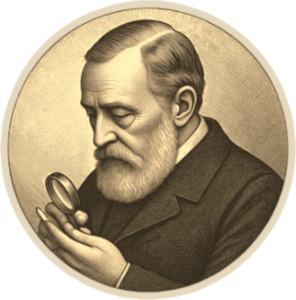
THE VIRCHOW PRIZE 2026
IS BESTOWED UPON
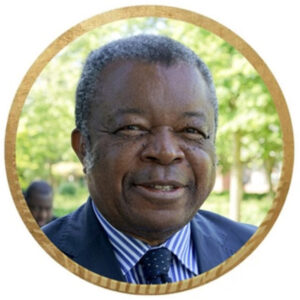
JEAN-JACQUES MUYEMBE
Université de Kinshasa, DR Congo
Institut National de Recherche Biomédicale (INRB), DR Congo
Institut National de Recherche Biomédicale (INRB), DR Congo
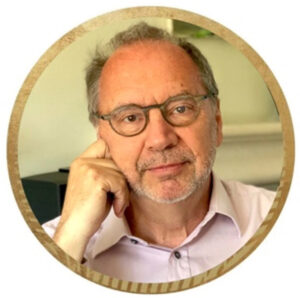
PETER PIOT
Institute of Tropical Medicine, Antwerp, Belgium
London School of Hygiene & Tropical Medicine (LSHTM), UK
“for their pioneering and enduring leadership in the discovery, control, and understanding of epidemic threats, and for advancing equitable, multilateral cooperation and governance that have fundamentally strengthened global preparedness and solidarity in the face of infectious disease outbreaks”
Joint Statement of Jean-Jacques Muyembe and Peter Piot
The Virchow Prize 2026 Laureates
“We are humbled by receiving this prestigious Virchow Prize, and deeply touched that we are receiving this together, after many decades of collaboration and friendship. It is also a privilege to follow in the footsteps of the previous laureates. This is above all a recognition of the numerous colleagues from all over the world who worked with us over several decades, and whom we thank from the bottom of our heart. This award is also a tribute to the hard work of basic and applied scientists of numerous disciplines, and of policy makers and those on the front lines, many who work in extremely challenging conditions as in Ebola outbreaks.
Epidemics and health crises – whether Ebola, HIV/AIDS, maternal mortality, or diabetes- have taught us that these are not just a medical issue, but also tests of trust, equity, leadership, and political and scientific cooperation – as stated by Rudolf Virchow over a century ago. As we continue to face renewed threats in challenging times, this recognition reinforces our drive to work towards affordable scientific innovation, investments in resilient health systems, and in strengthening equitable research partnerships across countries , and above ensuring that scientific progress genuinely translates into health for all in the spirit of Accra Reset. Global health investments and solidarity are needed more than ever.”
The Virchow Prize 2026 Announcement
as made by
Professor Dr. Quarraisha Abdool Karim
Co-Chair | Virchow Prize Committee
Prof. Dr. Ole Petter Ottersen
Co-Chair | Virchow Prize Committee
PREAMBLE
Achieving a resilient, equitable, and sustainable future for humanity demands solutions that are global in vision, systemic in design, and ethically anchored. The United Nations 2030 Agenda provides the integrative blueprint for such transformation, recognising health as a unifying thread across all 17 Sustainable Development Goals (SDGs), and as such, an entry point to social justice, gender equity, and planetary stewardship.
As we confront escalating health disparities, environmental degradation, and multiple, interconnected global fragilities – from pandemics, conflicts, and forced migration to food insecurity and climate change – the imperative for multilateralism and transregional solidarity grows ever more urgent. These complex and compounding challenges reveal the limits of siloed solutions and underscore the need for inclusive governance frameworks.
Advancing health for all, particularly the most vulnerable, demands not only biomedical innovation but also sociopolitical courage that engages with lived realities. In this context, the Virchow Prize serves as a unique stage to champion multilateralism and elevate models of cooperation that address root causes of inequity and protect planetary and human health.
In this spirit, the Virchow Prize celebrates transformative contributions that mirror Rudolf Virchow’s conviction that medicine is fundamentally anchored in social science. The Prize honours those who operationalise this vision by recognizing leadership that challenges injustice and fosters structural change.
On behalf of the Virchow Foundation and the Virchow Prize Committee, it is our great privilege to announce that the Virchow Prize 2026 is bestowed upon
JEAN-JACQUES MUYEMBE & PETER PIOT
“for their pioneering and enduring leadership in the discovery, control, and understanding of epidemic threats, and for advancing equitable, multilateral cooperation and governance that have fundamentally strengthened global preparedness and solidarity in the face of infectious disease outbreaks”
Today’s decision to award the Virchow Prize 2026 jointly to Jean‑Jacques Muyembe and Peter Piot honors not only two extraordinary individual scientists, but also a shared trajectory that has profoundly shaped the modern understanding of infectious disease and outbreak preparedness, global health governance, and the indispensable role of investments in strengthening international institutions and global solidarity. Their intertwined contributions span from the earliest encounter with one of the most feared pathogens of our time – the Ebola virus – to the evolution of global systems for epidemic response, prevention, and cooperation. In doing so, they embody the very spirit of Rudolf Virchow’s insight that health is inseparable from social organization, governance, and collective responsibility.
The careers of Muyembe and Piot are anchored in one of the defining moments of modern infectious disease history: the emergence of Ebola in 1976 – exactly 50 years ago. In the remote region of Yambuku in what is now the Democratic Republic of the Congo (DRC), Muyembe, working under conditions of profound scarcity, confronted a mysterious and deadly outbreak. Without protective equipment, laboratory infrastructure, or established protocols, he conducted field investigations, collected clinical samples, and sought to understand the nature of a rapidly spreading disease. His work laid the essential groundwork for identifying the pathogen and for developing initial strategies of containment[i]. At the same time, in Antwerp, Belgium, Piot and colleagues analyzed the samples sent from the field, contributing to the identification of a previously unknown virus and helping to shape the first scientific characterization of Ebola. Two weeks after arrival of the samples, Piot travelled to Yambuku and joined the local team of Muyembe undertaking field investigations on source and spread of the virus.
This moment was not simply one of scientific discovery; it was a powerful demonstration of the necessity of collaboration across contexts, disciplines, and geographies, highlighting our interconnectedness and shared vulnerability. The flow of knowledge – from rural Congo to European laboratories and back into the field – illustrated both the possibilities and the inequities inherent in global health partnerships. Over the decades, both Muyembe and Piot have worked, partly independent from each other in complementary ways, partly closely together, to transform that model into one rooted more firmly in equity, reciprocity, and shared leadership – and one unleashed from the colonial vestiges of the global governance system.
Jean-Jacques Muyembe chose to remain in his home country and build scientific capacity where it was most urgently needed. He played a decisive role in investigating numerous Ebola outbreaks over subsequent decades, advancing clinical understanding, refining strategies for patient care, and contributing to the development of novel therapies.Muyembe is the co-inventor of the monoclonal antibody mAb114, the first FDA-approved Ebola treatment.
Furthermore, Muyembe has made substantial contributions to building outbreak research and responses. He has set up a substantial surveillance, laboratory diagnostic and clinical infrastructure that continues to be at the forefront of outbreaks in the Democratic Republic of the Congo (DRC) and beyond, e.g. during the COVID-19 pandemic, recent Mpox outbreaks, and now with the new 2026 Ebola outbreak showing again its significant relevance.
These investments in national institution building, training and capacity development have ensured that future responses to epidemics in the DRC and the wider region would be led increasingly by local expertise. This includes Muyembe heading the National Institute of Biomedical Research (INRB), which has been a WHO Collaborating Centre since 2018, and serving as the inaugural President of the Congolese Academy of Science. His work challenges and successfully counters the historical marginalization of scientists from the Global South and exemplifies the importance of investing in enduring, locally anchored research and response systems.
Jean-Jacques Muyembe has been recognized by numerous international awards, including the Christophe Mérieux Prize, the Royal Society Africa Prize, the government of Japan’s Hideyo Noguchi Africa Prize and, together with Peter Piot, the WHO Director-General’s Global Health Leaders Awards. He was made a Chevalier de l’Ordre National de Léopard of the DRC and an Honorary International Fellow of the American Society of Tropical Medicine and Hygiene (ASTMH). Muyembe furthermore received the African Union CPHIA Lifetime Achievement Award in Public Health.
Peter Piot extended the lessons of Ebola into a broader rethinking of global health governance. His leadership in the response to HIV/AIDS and his guiding role as Under-Secretary-General of the United Nations and Founding Executive Director of UNAIDS, the Joint United Nations Programme on HIV/AIDS, marked a profound shift in how the world addresses complex, transnational health crises.
Piot has consistently emphasized that infectious diseases cannot be understood or controlled in isolation from the social, economic, and political environments in which they spread. And that is precisely the fundamental essence and very heart of Virchow’s legacy. By bringing together multiple agencies of the United Nations system and advocating for coordinated, multisectoral action, he has been instrumental in shaping a new model of global cooperation that recognizes that effective responses require not only science, but also solidarity, shared responsibility, and sustained political commitment – a systemic and holistic model which is now being put to the test in a way that has not been seen for a generation.
Piot is a member of the US National Academy of Medicine, the National Academy of Medicine of France, the German National Academy of Sciences Leopoldina, the Royal Academy of Medicine of Belgium, and a fellow of the UK Academy of Medical Sciences and the Royal College of Physicians.
He is Chair of the Scientific Council of the Institut Pasteur de Dakar (Senegal) and of the Strategic Council of the Pasteur Network. Furthermore, he has been Vice-Chair of GHIT Fund, Tokyo (Japan), and a founding Board Member of CEPI and The Global Fund to Fight AIDS, Tuberculosis and Malaria.
Peter Piot has received numerous awards, among them the John Dirks Canada Gairdner Global Health Award, Prince Mahidol Award, Robert Koch Gold Medal, Hideyo Noguchi Africa Prize, Nelson Mandela Award for Health and Human Rights, and, together with Jean-Jacques Muyembe, the WHO Director-General’s Global Health Leaders Awards. He was ennobled a Baron by King Albert II of Belgium and Knight Commander of the Most Distinguished Order of St Michael and St George in the UK. Further honors include the Grand Cordon of the Order of the Rising Sun in Japan.
COMMON MERITS OF THE VIRCHOW PRIZE LAUREATES 2026

Taken together, the contributions of Muyembe and Piot illustrate a continuum that is central to advancing health for all: from discovery to delivery, from local response to global coordination, from emergency action to long-term system strengthening. Their work has directly improved the ability to detect, understand, and control deadly outbreaks, while also influencing broader frameworks for addressing global health challenges in a manner that is equitable and leaves no one behind.
This legacy is particularly resonant in the context of the present moment. Recent Ebola outbreaks, as well as other re-emerging infectious threats, remind us that the conditions that give rise to epidemics – ecological disruption, fragile health systems, inequality, and mobility – persist and, in many cases, are intensifying and rendering the whole world vulnerable.
While scientific advances have dramatically improved the availability of diagnostics, vaccines, and treatments, the laureates remind us on the need for ongoing vigilance in surveillance and investments in these tools and underscore that the effectiveness of these tools depends on the strength of the systems that deploy them and the trust of the communities they serve. The experiences of past and current Ebola outbreaks have shown that even the most sophisticated biomedical interventions can falter in the absence of robust public health infrastructure, political leadership, community engagement, and international coordination.
In this regard, the work of Muyembe and Piot remains profoundly relevant. Their careers underscore the necessity of preparedness – not as a technical exercise alone, but as a sustained commitment to building resilient systems, fostering collaboration, and ensuring equitable access to knowledge and resources. They remind us that the response to any outbreak is only as strong as the networks of cooperation that underpin it.

Equally, their joint recognition speaks directly to the enduring importance of multilateralism. In an era marked by geopolitical tensions and fragmentation, the management of global health threats requires institutions that can convene, coordinate, and act across borders. The architecture that has evolved over the past decades – from WHO-led initiatives to broader partnerships involving governments, civil society, philanthropies, and research institutions – owes much to the vision and leadership exemplified by figures such as Piot, and to the practical experience and credibility of leaders such as Muyembe. Their work demonstrates that multilateral institutions are not abstract constructs, but living mechanisms that translate shared values into action, enabling countries to respond collectively to threats that no nation can address alone.
Moreover, the joint recognition of an African and a European scientist carries deep symbolic and substantive significance. It reflects the interdependence of regions and the recognition that global health progress depends on collaboration across continents, and between Africa and Europe not least. For too long, narratives of scientific discovery and innovation have been dominated by perspectives from high-income settings.
Honoring Muyembe affirms the central role of African expertise and leadership in addressing challenges that disproportionately affect the continent. At the same time, through Piot, it reinforces the importance of equitable partnerships, in which knowledge, recognition, and resources are shared more justly.
Finally, the choice of Muyembe and Piot resonates strongly with Virchow’s own legacy. Virchow insisted that medicine is a social science and that health is shaped by political and societal conditions. He called for action not only in laboratories and clinics, but also in the structures that govern society. In different but complementary ways, both laureates have embodied this principle. Muyembe has brought innovation and scientific excellence into the most challenging field conditions, guided by a commitment to his communities and to building local capacity. Piot has translated scientific insight into global action, helping to reshape policies, institutions, and norms at the highest levels.
A joint award to Jean‑Jacques Muyembe and Peter Piot recognizes more than individual achievements. It affirms a decolonized model of global health that is collaborative, equitable, and deeply attuned to the interplay between science and society. It sends a timely message in the face of ongoing and future epidemics: that preparedness, solidarity, and strong multilateral institutions are not optional, but essential. And it highlights and is a shining example for the enduring importance of global solidarity comprising partnerships between Africa and Europe, more broadly between the Global South and North and on a worldwide international scale, as a foundation for advancing health for all.
—
[i] Breman JG, Heymann DL, Lloyd G, McCormick JB, Miatudila M, Murphy FA, Muyembé-Tamfun JJ, Piot P, Ruppol JF, Sureau P, van der Groen G, Johnson KM. Discovery and Description of Ebola Zaire Virus in 1976 and Relevance to the West African Epidemic During 2013-2016. J Infect Dis. 2016 Oct 15;214(suppl 3):S93-S101. doi: 10.1093/infdis/jiw207. Epub 2016 Jun 29. PMID: 27357339; PMCID: PMC5050466
Kai Wegner
Governing Mayor
of Berlin
High Patron of the
Virchow Foundation

© Yves Sucksdorff
Since 2025, the Governing Mayor of Berlin, Kai Wegner, has assumed the High Patronage of the Virchow Foundation. Under the High Patron, the mission of the Virchow Foundation and its alignment with health-related Sustainable Development Goals within the United Nations 2030 Agenda are endorsed.
One of the Virchow Foundation’s goals is to enhance and strengthen a core value of German policy: multilateral, humanitarian-focused international cooperation. Therefore, bipartisan support from the Bundestag, the High Patronage of the Virchow Prize of Federal President Frank-Walter Steinmeier in 2022, and in 2023 and 2024, of German Parliament President Bärbel Bas, are crucial.
The symbolizing of this corporate identity of Berlin and Germany, striving towards global commitment and collaboration, is emphasized by the sponsorship of Governing Mayor Kai Wegner and his hosting of the Virchow Prize Ceremony at Rotes Rathaus Berlin | Berlin City Hall as well as by the deliberation on the Virchow Prize on October 14, 2022, which for the first time put global health on a plenary debate agenda at the German Bundestag.
THE VIRCHOW PRIZE CEREMONY 2026
FESTAAL | ROTES RATHAUS BERLIN
SATURDAY, OCTOBER 10, 2026 | 17:00 CET
– Access for registered guests only –
– The registration for this event has ended –
PROGRAMME
MASTER OF CEREMONIES
Dr Miriam Orcutt
Member of the Board of Trustees, Virchow Foundation
WELCOME NOTES
Kai Wegner
Governing Mayor of Berlin, High Parton of the Virchow Foundation
Roland Göhde
Co-Founder & CEO, Virchow Foundation
Reem Alabali Radovan
Federal Minister for Economic Cooperation and Development
Dr Tedros Adhanom Ghebreyesus
Director-General, World Health Organization (WHO)
MUSICAL INTERLUDE
Lily Dahab Vocals, Carlos Corona Guitar, Bene Aperdannier Piano
LAUDATORY SPEECH
in honour of the Virchow Prize Laureates
Jean-Jacques Muyembe-Tamfum and Peter Piot
Dr Chikwe Ihekweazu
Assistant Director-General, World Health Organization (WHO)
PRESENTATION OF THE VIRCHOW PRIZE TO
JEAN-JACQUES MUYEMBE-TAMFUM AND PETER PIOT
REACTIONS OF THE VIRCHOW PRIZE LAUREATES
moderated by the Master of Ceremony
CLOSING REMARKS
Professor Quarraisha Abdool Karim and Professor Ole Petter Ottersen
Co-Chairs, Virchow Prize Committee
Professor Detlev Ganten
Co-Founder & Member of the Board of Trustees, Virchow Foundation
Final Words of the Master of Ceremonies & Invitation to Reception
VIRCHOW PRIZE RECEPTION
Säulensaal, Rotes Rathaus Berlin

The Virchow Foundation gratefully acknowledges the generous support for the Virchow Prize 2026: Software AG – Stiftung, Bayer Foundation, The Senate of Berlin, BAO Stiftung, Else Kröner-Fresenius-Stiftung, Prof. Dr. Wolfgang Maennig, The Institute of Philantrophy, the ‘Friends of the Virchow Foundation‘ and other anonymous benefactors – see also here.
THE VIRCHOW PRIZE LECTURE 2026
FESTAAL | ROTES RATHAUS BERLIN
SATURDAY, OCTOBER 10, 2026 | 15:00 CET
– Access for registered guests only –
– The registration for this event has ended –
PROGRAMME
MUSICAL WELCOME
Singing Shrinks
WELCOME NOTE
Professor Detlev Ganten
Co-Founder & Member of the Board of Trustees, Virchow Foundation
INTRODUCTORY REMARKS
Professor Quarraisha Abdool Karim and Professor Ole Petter Ottersen
Co-Chairs, Virchow Prize Committee
VIRCHOW PRIZE LECTURES OF THE 2026 LAUREATES
Jean-Jacques Muyembe-Tamfum
Peter Piot
INTERVIEW WITH THE VIRCHOW PRIZE LAUREATES
Moderator
Dr Aku Kwamie
Member of the Virchow Prize Committee
CLOSING REMARKS
Professor Quarraisha Abdool Karim and Professor Ole Petter Ottersen
Co-Chairs, Virchow Prize Committee